
BLOG
- 14 Μάι. 2026
Buying a Newly Built Apartment in Ioannina: What to Check Before You Commit
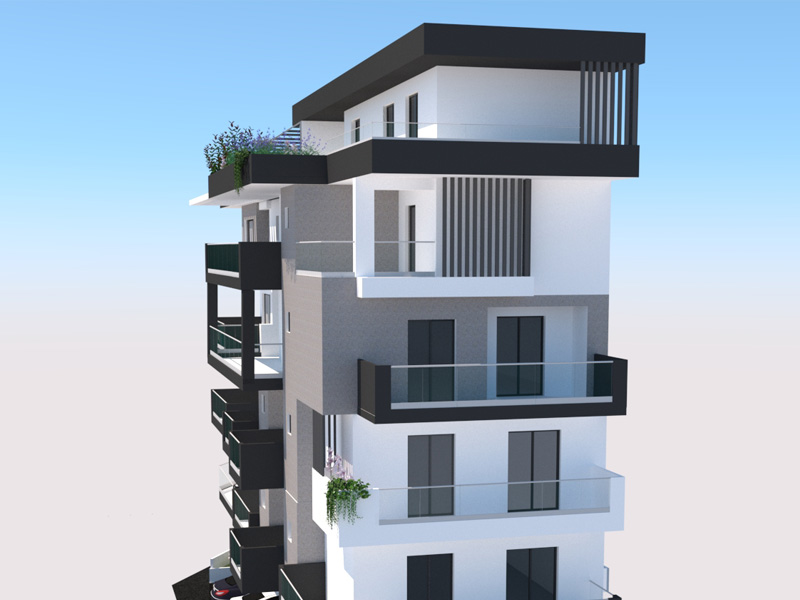
Buying a newly built apartment is one of the more complex decisions you will make. On a screen and during a first visit, two apartments can look very similar. In practice, the difference between them can translate into tens of thousands of euros in resale value, and into an entirely different daily experience.
The quality of a newly built apartment is judged on specific technical points. Many of these are no longer visible once the walls are painted, and they are easy for a buyer to miss when the focus is purely on aesthetics. The eight checks below are worth carrying out before you commit to any decision.
1. Location
Location shapes the resale prospects of a property more than any other single factor. Beyond the general neighbourhood, look closely at the micro-location: the distance to essential services, schools, shops, and the University; whether you need a car for daily errands; and whether the street is busy or quiet at different times of day.
The second factor is orientation. An apartment that does not receive enough natural light will remain dark, no matter how high the quality of the materials used. Visit the space at different times of day before you decide.
2. Structural Design and Seismic Protection
Every new building in Greece is designed in accordance with the Greek Seismic Code (EAK-2000) and the relevant Eurocodes, in particular Eurocode 8 for seismic design. Ioannina sits within a recognised seismic zone, which means structural integrity is not a detail.
Ask to see the structural design report and find out which engineer signed it. Ask about the concrete supplier. Established names such as Interbeton certify the strength of the material in every delivered batch. Ask, as well, about the thickness of the load-bearing elements and the foundation study.
3. Energy Class
Under the Greek Regulation on the Energy Performance of Buildings (KENAK), every new building in Greece must, at minimum, fall within energy category B. The legislation, however, continues to tighten: the corresponding European directive is moving member states toward Nearly Zero-Energy Buildings (nZEB), and further alignment of KENAK is expected over the coming years.
An A+ energy classification means the building already meets the standards expected to become mandatory in the future. Achieving it requires a specific technical protocol: an external thermal façade system with 10-12 cm of insulation, energy-rated window frames with triple glazing, proper treatment of thermal bridges, underfloor heating, high-efficiency heat pumps, a solar water heater, and provisions for photovoltaic panels.
Ask to see both the Energy Performance Study (MEA) and the Energy Performance Certificate (PEA).
4. Materials and the Names Behind Them
The phrase "premium materials" on its own means nothing concrete. Ask for names. A serious developer will tell you, without hesitation, which supplier is used for every critical category:
- Concrete
- Thermal insulation
- Window and door frames
- Underfloor heating
- Heat pumps
- Built-in appliances
- Railings and aluminium components
The value of named suppliers lies in their certified guarantees and in the availability of spare parts over the coming decades.
5. Floor Plan, Light, Parking, Storage
On the floor plan, check the flow of the space. See how naturally one moves from the entrance to the living room, and from the kitchen to the bedrooms. Notice whether there are "blind" rooms or areas without genuine natural light, and whether the storage spaces match the needs of a family.
Look at how you access the apartment from the basement and the pilotis. An elevator that also serves the storage level, hallways without obstacles, and corridor widths that accommodate a stroller or grocery bags are details that don't show up in photographs, but you live with them every day. Ask whether each apartment includes a covered parking space or an open one, and whether dedicated storage is provided.
6. Smart Home Systems
Smart home features are valuable to the extent that they serve real, everyday needs. Ask which functions are delivered ready to use: remote control of heating, cooling, and water heater from a smartphone, automation for shutters and blinds, video intercoms, an alarm system, and LED lighting throughout the apartment.
Ask, too, about the infrastructure that isn't visible but makes a real difference later: an electrical panel with room for future additions, pre-installed wiring for electric vehicle charging in the garage, provisions for rooftop photovoltaic panels, and fibre-optic cabling. These provisions cost little today. Later, they turn into expensive or technically impossible upgrades.
7. The Documents You Should Request
Before you proceed to a notarial deed, the developer should be able to provide:
- A valid building permit
- Structural and architectural plans signed by the engineers
- The Energy Performance Study and the Energy Performance Certificate
- The percentage allocation table for ownership shares
- Material certificates for the main systems
- Supplier warranties for window frames, heat pumps, and electrical appliances
- A fire safety certificate
- An elevator inspection certificate
The absence or delay of any of the above is a signal that warrants attention.
8. Who the Developer Is
A developer's liability for construction defects extends for years after delivery. During that interval, however, many construction companies have already ceased to operate. The maturity and consistency of the developer is the most genuine guarantee you can have.
Before buying a newly built apartment, check how many years the company has been operating, how many projects it has delivered, and whether its earlier work has held up over time. Visit completed buildings that are five or ten years old. Look at how the rendering, the insulation, the common areas, and the façades have aged. Ask, too, to speak with owners from previous projects.
A serious developer will gladly send you to a home delivered years earlier.
Book a Consultation
G&V Papathanasiou has 25 years of experience in Ioannina, 30 completed buildings, and more than 400 satisfied buyers. Every project the company delivers is fully certified at energy class A+, built with leading material suppliers and the developer's own daily, on-site supervision.
In a personal consultation, the company's team presents the available and under-construction properties, the full technical specifications, and the document file for each project. If you wish, they will also accompany you on a visit to older buildings, so you can see for yourself how they have performed over time.